
Do Dental Implants Hurt? What to Expect During and After Treatment
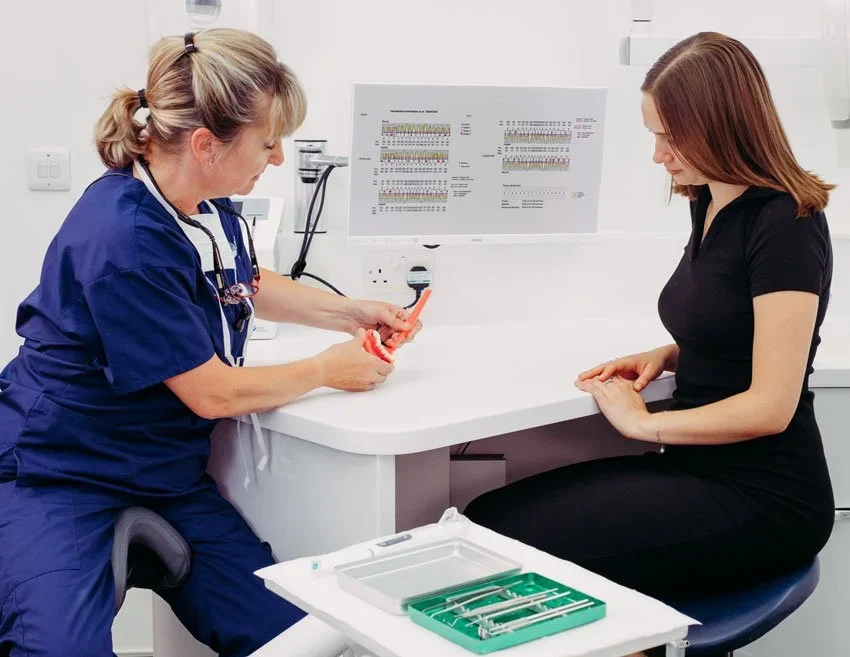
The most common question we hear from patients who are considering dental implants is whether they hurt. The honest answer is: far less than most people expect. In over 19 years of placing implants in Hove and Haywards Heath, the reaction we hear most often once treatment is done is that patients wish they had done it sooner.
That said, concern about pain is legitimate and worth addressing properly. Dental implant surgery is a real clinical procedure, and knowing what to expect during treatment, in the days afterwards and through recovery helps anxious patients make a clear-eyed decision rather than one driven by worry about the unknown.
This guide covers what you will actually experience at each stage: during the procedure, in the 48 hours that follow, and through the recovery period beyond that. It also explains the options available if you are particularly nervous about dental treatment.
During the Procedure: What You Will and Will Not Feel
The placement of a dental implant is carried out under local anaesthetic. Once the anaesthetic has taken effect, you will not feel anything sharp or painful during the procedure. What you will notice is pressure and some pushing as the implant is placed, and vibration from the drilling stage. This is not pain. It is sensation without sharpness, and your surgeon will confirm you are fully numb before starting.
For a straightforward single tooth implant, the surgical part of the procedure typically takes around ten to fifteen minutes. More complex cases, including multiple implants or full-arch treatment, take longer and may involve more preparation. In all cases, the experience during surgery is determined far more by the skill and experience of the surgeon than by the nature of the procedure itself.
Most patients tell us that implant placement was considerably less uncomfortable than having the original tooth removed. That comparison tends to land well, because virtually everyone has experience of a tooth extraction and most found it less bad than they feared. Implant surgery is typically the same.
If you are nervous about dental treatment
For patients who are particularly anxious, or for complex cases involving multiple implants, sedation is available. Intravenous sedation is provided by our dedicated anaesthetist, Dr Rex Yetton, and makes the procedure feel comfortable and relaxed. Most patients who have sedation remember very little of the appointment afterwards, which for many nervous patients is itself a significant relief. You can read more about what sedation involves on our sedation service page.
The First 48 Hours: What Is Normal
Once the local anaesthetic wears off, some mild soreness around the treatment site is normal. This is not the kind of pain that stops you functioning. Most patients manage it comfortably with standard over-the-counter pain relief, taken regularly for the first couple of days as directed on the packaging.
Swelling is also common and entirely expected. It tends to build over the first day and typically peaks around 48 to 72 hours after surgery, then gradually subsides. Applying an ice pack to the outside of the face in the first few hours after surgery can help reduce swelling. After the first 24 hours, gentle warmth is more effective than cold. Sleeping with your head slightly raised in the first night or two also helps.
Some bruising around the jaw or cheek is possible, particularly in more complex cases, and will fade on its own over the following week. A small amount of blood-tinged saliva in the first few hours after surgery is normal.
Most patients are surprised by how manageable these first two days are. The anticipation is usually harder than the reality.
What to avoid in the first 48 hours
Strenuous exercise, including running and the gym, which increases blood pressure and can slow healing.
Hot food and drinks on the day of surgery.
Disturbing the surgical site with your tongue or fingers.
Smoking or vaping, which significantly impairs healing in the mouth.
You will be given a detailed written aftercare sheet covering everything you need to know after your appointment. Further guidance is on our patient care page.
Recovery and Time Off Work
For a single tooth implant placed under local anaesthetic, most patients return to their normal routine, including desk work, the following day. The first 48 hours call for rest and care, but the procedure does not typically take people off their feet beyond that.
For more complex treatment involving multiple implants, full-arch surgery or cases where sedation is used, you should plan for someone to drive you home after the appointment and expect to take the rest of that day and potentially the next day off. If your work is physically demanding, discuss the specifics with your surgeon at your assessment.
Eating is straightforward once the anaesthetic has fully worn off, which usually takes a few hours. Stick to soft foods for the first few days and avoid very hot food and drink on the day of surgery. Most patients are back to a normal diet within a week.
Dissolvable stitches are often used to close the surgical site. These typically remain for two to three weeks and dissolve on their own. If they become uncomfortable before dissolving, you can contact us to have them removed earlier.
The implant itself then goes through a healing period called osseointegration, during which it fuses with the surrounding bone. This takes several weeks to a few months depending on the case, but it is not a painful process. Most patients are not aware of it happening.
How We Keep Treatment Comfortable at The Implant Centre
Comfort during implant treatment is not just about anaesthesia. It is the result of the whole clinical experience, from the assessment and planning to the skill of the surgeon and the support available afterwards.
At The Implant Centre, we work exclusively with implant patients. Our surgical team places implants every day, and experienced surgeons carry out procedures more quickly and with less tissue disruption than less practiced clinicians. That speed and precision makes a direct difference to how patients feel during and after treatment.
We use 3D digital scanning and guided surgery planning for every case. Digital planning means the implant position is mapped precisely in advance, which reduces the need for adjustment during surgery and keeps the procedure as short as possible.
We also offer a written guarantee: in the rare event that an implant does not integrate with the bone, we provide a full refund or a free replacement. The full terms are on our implant guarantee FAQ page.
If you would like to understand the full treatment journey before committing to anything, our patient journey page walks through every stage from assessment to final fitting.
Common Questions About Dental Implant Pain and Recovery
-
Dental implants are not painful during the procedure when carried out under local anaesthetic. You will feel pressure and vibration but nothing sharp. After surgery, mild soreness is normal and manageable with standard painkillers. Most patients find the experience significantly better than they anticipated. Read the full FAQ on whether dental implants are painful.
-
Some mild soreness around the site is normal for a few days after surgery. It should not be severe and is easily managed with over-the-counter pain relief. If pain increases after the first few days rather than subsiding, contact us promptly so we can check the area. Read the full FAQ on pain after implant surgery.
-
Swelling after a dental implant is normal and typically peaks at around 48 to 72 hours before gradually settling. Ice packs in the first 24 hours and gentle warmth thereafter help manage it. Sleeping with your head slightly elevated also reduces swelling. Read the full FAQ on swelling and bruising after dental implants.
-
Stitches are often used to close the surgical site and are dissolvable, typically remaining for two to three weeks. If they become uncomfortable before dissolving, contact us and we can remove them. Read the full FAQ on stitches after dental implant surgery.
Ready to Find Out More?
If concern about pain has been stopping you from finding out whether implants are right for you, the best next step is a conversation rather than a commitment. At a comprehensive implant assessment, you can ask every question you have, get a clear picture of what your specific treatment would involve and receive a fixed written quote, with no obligation to proceed.
We treat many nervous patients and take the time to work through concerns properly before any treatment begins. If sedation is something you would like to discuss, mention it when you book and we will make sure the right conversation happens at your assessment.
To book a consultation at our Hove or Haywards Heath clinic, visit our online booking page. You can also view implant pricing or meet the surgical team before you decide.
Learn more about dental implants from how expert in these videos


