
Can You Get Dental Implants on the NHS?
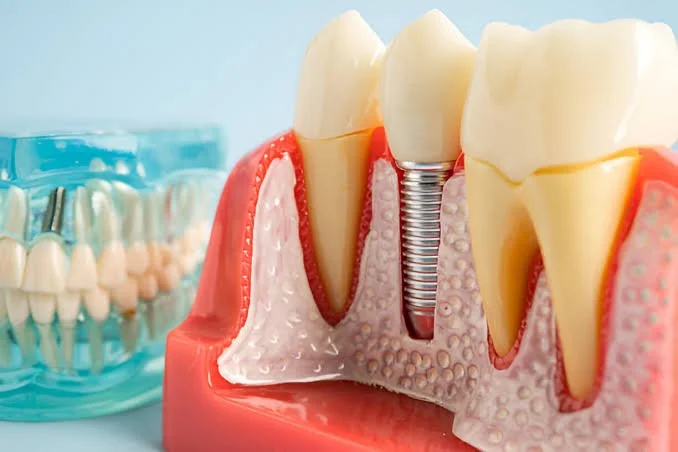
The short answer is: very rarely, and only if you meet specific clinical criteria. For most people asking this question, the honest answer is no, NHS funding is not available. But the longer answer matters, because there are genuine exceptions, and knowing whether you might qualify is worth understanding before you make any decisions about private treatment.
This guide covers when NHS funding for implants does exist, how the referral process works, what the NHS offers instead, and what private treatment involves if you find you need to go that route.
When the NHS Does Fund Dental Implants
NHS dental implant funding exists, but it is commissioned as an exceptional treatment through hospital dental services, not through a high street NHS dentist. There are three circumstances in which funding is generally considered.
Congenitally missing teeth
Some people are born with a condition that affects how many adult teeth develop. Hypodontia, where six or more permanent teeth are missing, and oligodontia, a more severe form involving even greater absence, can in some cases qualify for NHS-funded implants as part of a broader treatment plan. The clinical threshold and local commissioning decisions affect whether funding is approved.
Reconstruction after head and neck cancer
Patients who have undergone surgery for mouth, jaw or throat cancer, or who have received radiotherapy to the head and neck area, may qualify for implant-based reconstruction as part of their NHS cancer care. This is managed through specialist hospital teams rather than through a general dental referral.
Significant facial trauma
Where teeth have been lost as a direct result of major facial trauma, for instance in a serious accident, NHS funding for reconstruction including implants may be considered on a case-by-case basis through hospital services.
In all three cases, the pathway is the same. Your GP or dentist refers you to a hospital dental department, where you are assessed by a specialist team. If the clinical team agrees you meet the criteria, they apply for NHS funding on your behalf. You do not apply for funding directly.
One thing to be clear about:
NHS funding is not available for implants to replace teeth lost through gum disease, decay, injury unrelated to major trauma, or simply the passage of time. The vast majority of people researching dental implants on the NHS will not fall into any of the funded categories.
Why Implants Are Not Routinely Available on the NHS
NHS dentistry is commissioned to address clinical need within a finite budget, and implants are assessed alongside less expensive alternatives. For the NHS, a missing tooth can be replaced with a denture or a bridge, both of which are available under standard NHS dental bands. Implants are not classed as clinically necessary when those alternatives exist.
This is not a comment on the quality of NHS dental care, which serves millions of people well. It reflects the way NHS priorities are set: implants are expensive and time-intensive, and the system is not funded to provide them routinely. If you want implants and do not qualify for exceptional funding, private treatment is the only route.
Most implant treatment abroad requires more than one trip. An initial consultation and assessment, placement of the implants, a healing period of weeks to months, and then a second visit for the final fitting. Some clinics offer compressed timelines to accommodate international patients, which has its own implications (see the next section). For full arch work, budget for several return flights and hotel stays per person, not one.
What the NHS Offers Instead
Under NHS Band 3 treatment, which covers the most complex dental work, patients can access dentures and bridges as alternatives to implants.
Dentures
A full or partial denture is removable and replaces one or more missing teeth. Acrylic dentures are the most common and the most affordable, though many patients find them bulky or unstable over time. Metal-framework partial dentures are more secure and longer-lasting. Neither type replaces the tooth root, which means the underlying bone can continue to diminish after tooth loss.
Bridges
A conventional bridge fills a gap by anchoring a false tooth to the adjacent natural teeth on either side. It is fixed in place, which many patients prefer over a removable denture. The trade-off is that the teeth used as supports need to be filed down, which damages healthy tooth structure and can lead to further problems over time.
Both options have their place, and for some patients they are the right answer. If you want to understand the full picture on alternatives before making a decision, our dental implant alternatives page covers the options in more detail.
Going Private: What It Costs and How It Works
If you have established that NHS funding does not apply to your situation, private implant treatment is the route most people take. The first step is always a comprehensive assessment, not a commitment to treatment.
At that assessment, your clinician examines your teeth, gums and bone in detail, including a 3D scan that shows exactly what bone is available and where implants can be placed. You leave with a clear treatment plan and a fixed written quote. There is no obligation to proceed at that stage.
Private implant costs vary based on how many teeth are being replaced, the complexity of your case, and whether any preparatory work such as extractions or bone preparation is needed. A single tooth implant and a full-arch treatment are very different in scale and price.
We publish clear information about what is included in treatment costs and the finance options available to spread payments on our treatment costs page. We will always give you a fixed written quote before anything begins.
Why Specialist-Led Treatment Matters
If you are paying privately, choosing where to go is one of the most important decisions in the process. Implants are a long-term investment and the quality of the planning, the placement and the aftercare determines how long they last.
At The Implant Centre in Hove and Haywards Heath, implants are all we do. Our surgical team has placed nearly 30,000 implants, our clinicians lecture nationally on implant technique, and every restoration is made by the technicians at our on-site Ceramic Designs laboratory. We back our work with a written guarantee: if an implant does not integrate, we offer a full refund or a free replacement. You can read the detail of our guarantee on our implant guarantee FAQ page.
For more on what sets specialist implant care apart from treatment at a general dental practice, visit our why choose us page.
Questions About NHS Dental Implants
-
If you qualify for NHS-funded implant treatment through a hospital specialist service, the treatment itself is provided as part of your NHS care without a private charge for the implant element. You may still be asked to pay standard NHS charges for associated dental treatment under your usual NHS band. The specifics depend on how the treatment is commissioned in your area.
-
Age alone does not determine eligibility for NHS-funded implants. Pensioners are subject to the same criteria as everyone else: congenitally missing teeth, reconstruction after head and neck cancer, or significant facial trauma. Some pensioners qualify for NHS dental charge exemptions on cost grounds, which may cover other dental treatment, but this exemption does not extend to privately commissioned implant treatment.
-
Where NHS-funded implant treatment is approved, it is delivered through hospital dental departments, and waiting times vary considerably by NHS trust and by the complexity of the case. Waiting times at specialist hospital services are often longer than in the private sector. If you qualify for funding, your referring dentist or the hospital team will be able to give you a realistic timeline based on your local service.
-
It is possible your dentist believes you meet the criteria for exceptional funding and intends to refer you to a hospital specialist for assessment. That referral and assessment does not guarantee funding will be approved. If you have been told you qualify, the next step is the hospital specialist assessment, where the clinical team makes the final decision and, if appropriate, applies for funding on your behalf. A high street NHS dentist cannot commission NHS implant treatment directly.
Find Out Where You Stand
If you have established that NHS funding does not apply, or if you would simply like an honest assessment of your options from a specialist team, a consultation at The Implant Centre is the right next step. You will get a clear picture of what treatment involves, what it costs and what the realistic outcome looks like for your specific situation.
Book your assessment at our Hove or Haywards Heath clinic via our online booking page. Appointments are available at both locations, and our team will match you with the right clinician for your case.
Learn more about dental implants from how expert in these videos


